The Story
Adapted by Tom Hanks himself from C.S. Forester's 1955 novel "The Good Shepherd," Greyhound delivers an intensely focused account of 48 hours of U-boat combat during the Battle of the Atlantic—the longest campaign of World War II. Originally destined for theaters in June 2020, the COVID-19 pandemic redirected this technically accomplished war film to streaming, where it found massive audiences and earned an Academy Award nomination for Best Sound.
48 Hours in the Black Pit
Set in February 1942, weeks after America entered WWII, Commander Ernest Krause (Tom Hanks) receives his first wartime command: the destroyer USS Keeling (callsign "Greyhound"), leading an international escort group protecting Convoy HX-25—37 merchant and troop ships crossing to Liverpool. The convoy must traverse the dreaded "Black Pit"—the mid-Atlantic gap beyond the reach of protective aircraft. For approximately 50 hours, Krause and his inexperienced crew face relentless attacks from German U-boat wolf packs, relying solely on naval training, faith, and split-second tactical decisions.
The film eschews extensive backstory, delivering an almost real-time immersion in bridge commands, sonar pings, and depth charge calculations. Director Aaron Schneider used Steven Spielberg's air traffic control sequence in Close Encounters as a tonal reference—the goal was technical authenticity over melodrama.
Quick Facts
- Release Date: July 10, 2020 (Apple TV+)
- Runtime: 91 minutes
- Director: Aaron Schneider
- Screenplay: Tom Hanks
- Budget: $50 million
- Apple Acquisition: $70 million
- Rating: PG-13
- Genre: War, Action, Drama, History
Cast & Crew
The film assembled an impressive ensemble of character actors led by two-time Oscar winner Tom Hanks and acclaimed British actor Stephen Graham, reuniting them years after they worked together on the HBO miniseries Band of Brothers.

Two-time Academy Award winner

Emmy Award winner, OBE
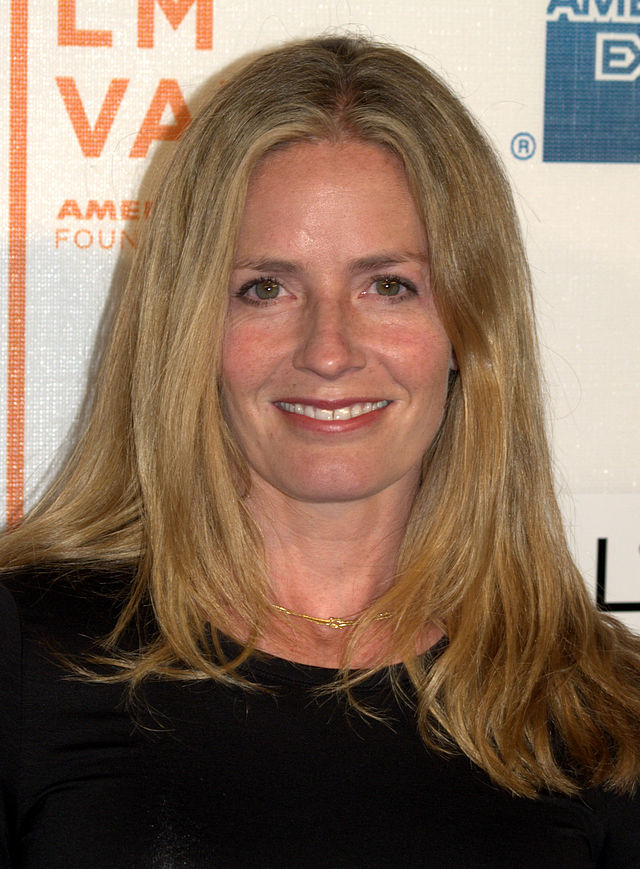
Academy Award nominee
Character actor, Mudbound
Behind the Camera
Aaron Schneider directed the film with a documentary-like precision, having previously won an Academy Award for the short film Two Soldiers (2003). Tom Hanks wrote the screenplay, marking only his third credited script after That Thing You Do! (1996) and Larry Crowne (2011). The supporting cast includes Manuel Garcia-Rulfo as Lopez, Karl Glusman as sonarman Eppstein, and notably Chet Hanks (Tom's son) as crew member Bushnell.
Producers Gary Goetzman and Tom Hanks' Playtone production company partnered with Bron Studios, FilmNation Entertainment, and Sony Pictures. Cinematographer Shelly Johnson shot the film on Panavision Millennium DXL cameras in 8K, while composer Blake Neely provided the tense musical score.
Production & Technical Achievement
| Aspect | Details |
|---|---|
| Filming Dates | March–June 2018 |
| Primary Location | Baton Rouge, Louisiana (USS Kidd DD-661) |
| Camera | Panavision Millennium DXL, 8K |
| Aspect Ratio | 2.39:1 (Widescreen) |
| VFX Studio | DNEG (Double Negative) |
| VFX Shots | 1,500 computer-generated shots |
| VFX Timeline | 4 months (accelerated schedule) |
Every Drop of Water is Digital—1,500 VFX Shots Built from Scratch
The film's most remarkable technical achievement is its fully CGI ocean. DNEG completed 1,500 computer-generated shots in an accelerated four-month timeline, using NVIDIA WaveWorks (video game software) to simulate realistic Atlantic swells. Director of Photography Shelly Johnson sailed with the Royal Canadian Navy to capture reference footage, while Schneider personally took 20,000 photographs of the USS Kidd using photogrammetry, creating a centimeter-accurate 3D model.
Additional CGI ships were modeled from 3D scans of real museum vessels: the ORP Błyskawica in Poland and HMCS Sackville in Halifax (the last surviving Flower-class corvette). VFX supervisor Nathan McGuinness created detailed "cheat sheets" mapping every ship position like a battleships game—ensuring military accuracy across thousands of digital frames.
Filmed Aboard the Real USS Kidd
Principal photography took place aboard the USS Kidd (DD-661), a Fletcher-class destroyer museum ship in Baton Rouge—the only surviving WWII destroyer still in wartime configuration. Production designer David Crank built a replica pilothouse 30% larger than the actual space to accommodate cameras, mounted on hydraulic gimbals that continuously simulated ocean motion while water cannons drenched actors. The authentic setting provided invaluable tactical realism, with U.S. Navy historians consulting throughout production to ensure procedural accuracy.
"This movie looks fantastic on a huge screen. It's an absolute heartbreak that people won't experience it in theaters." — Tom Hanks on the theatrical release cancellation
Tom Hanks Spent Eight Years Bringing This Story to Screen
Hanks discovered C.S. Forester's novel around 2012 and realized by page three that "this was an entire story told through the mental perspective of its protagonist." The adaptation maintains Forester's interior focus while altering key details: the novel's Krause is bitter and divorced from an unfaithful wife, while the film's Evelyn simply postpones marriage. Hanks' script breaks into naval "Watches" (4-hour crew rotations), filled with rudder commands, targeting vectors, and nautical codes—deliberately technical dialogue that immerses viewers in procedural authenticity.
This project extends Hanks' extensive WWII filmography: Saving Private Ryan (1998), Band of Brothers (2001, co-created with Spielberg), The Pacific (2010), and Masters of the Air (2024). Producer Gary Goetzman called Greyhound "probably our Navy annex" to the Band of Brothers universe.
Critical Reception & Reviews
Rotten Tomatoes: 78% critics (238 reviews), 76% audience
Metacritic: 64/100
IMDb: 7.0/10 (100,000+ ratings)
Critics' Consensus: "Greyhound's characters aren't as robust as its action sequences, but this fast-paced World War II thriller benefits from its efficiently economical approach."
Owen Gleiberman of Variety called it "less a drama than a tense and sturdy diary of the logistics of battle," while Time's Stephanie Zacharek praised its "somber elegance" and "abstract, poetic quality...less about rah-rah heroics than the secret burden of heroism." IndieWire's David Ehrlich offered the sharpest critique, calling it "a terse and streamlined dad movie...far too preoccupied with staying afloat to profile the guy at the helm."
Critics consistently compared it to Das Boot, Dunkirk, and Hanks' own Saving Private Ryan—acknowledging that while Greyhound lacks their emotional depth, its lean 91-minute runtime and technical precision carve out distinctive territory in the WWII genre.
Awards & Recognition
- 93rd Academy Awards Nominated for Best Sound (Warren Shaw, Michael Minkler, Beau Borders, David Wyman)
- BAFTA Film Awards Nominated for Best Visual Effects and Best Sound
- Golden Reel Awards (MPSE) WON Outstanding Achievement in Sound Editing—Feature Effects and Foley
- Visual Effects Society Multiple nominations for Outstanding VFX
- Cinema Audio Society Nominated for Outstanding Achievement in Sound Mixing
- Critics Choice Super Awards Nominated for Best Action Movie
The film received a total of 1 win and 24 nominations across various industry awards, with particular recognition for its technical achievements in sound design and visual effects.
The Battle of the Atlantic Was WWII's Longest Campaign
Winston Churchill coined the name in 1941, later writing: "The only thing that ever really frightened me during the war was the U-boat peril." The battle stretched from September 1939 to May 1945, claiming approximately 80,000 Allied sailors and merchant seamen alongside 28,000 German U-boat crewmen—a 70% casualty rate representing the most severe losses of any German armed forces branch.
The "Black Pit" depicted in the film was genuine: a mid-Atlantic gap beyond RAF aircraft range where convoys were most vulnerable. This gap wasn't closed until May 1943—over a year after the film's setting. Historian James Holland summarized the stakes: "Had the Atlantic been lost, so too would have Britain. There would have been no Mediterranean campaign, no D-Day, no VE or VJ Days."
The film takes minor historical liberties—notably the taunting radio messages from "Grey Wolf" were invented for dramatic effect; U-boats couldn't actually transmit on Allied frequencies. However, the tactical procedures, convoy formations, and depth charge patterns are meticulously accurate, vetted by naval historians and WWII veterans.
Pandemic Redirected a Theatrical Film to Streaming History
Sony originally planned theatrical release for June 12, 2020 (Father's Day weekend). When COVID-19 shuttered cinemas indefinitely, Apple won a competitive bidding war, paying $70 million for 15-year exclusive streaming rights—$20 million more than the production budget.
Hanks called the loss of theatrical release an "absolute heartbreak," stating: "This movie looks fantastic on a huge screen." The irony deepened when Hanks and wife Rita Wilson became among the first celebrities to test positive for COVID-19 in March 2020.
Despite the distribution pivot, Apple declared Greyhound the biggest debut weekend in Apple TV+ history, with Deadline Hollywood reporting viewership "commensurate with a summer theatrical box office hit." Notably, 30% of viewers were new subscribers—a significant acquisition metric. The film ranked 24th among most-watched streaming releases of 2020 and has spent over 600 days on Apple TV+'s Top 10, currently charting in 70+ countries.
Visual Storytelling & Cinematic Style
For fans seeking stunning visuals from the film, high-quality movie wallpapers capture the film's atmospheric naval combat sequences and dramatic tension. The film's cinematography emphasizes claustrophobic bridge interiors contrasted with vast, hostile ocean expanses, creating a visual language of isolation and vulnerability that mirrors Krause's psychological state.
Director Aaron Schneider deliberately avoided traditional war film aesthetics, instead embracing a documentary-like immediacy. The camera rarely leaves the bridge, forcing viewers to experience the fog of war alongside the crew. This restricted perspective heightens tension—when U-boats surface, we see them only as distant silhouettes through binoculars, never cutting away to show the enemy's perspective.
Optimal Viewing Experience
Tom Hanks famously lamented that Greyhound "looks fantastic on a huge screen," and for home theater enthusiasts planning the ultimate viewing experience, a Projector Calculator can help determine the ideal projector placement and screen size based on your room dimensions. The film's 2.39:1 widescreen aspect ratio and meticulously crafted visual effects truly shine when projected at theatrical scale, bringing the North Atlantic's hostile vastness into your living room with maximum impact.
Sequel Confirmed for 2026
Apple Studios greenlit Greyhound 2 in spring 2022, with filming scheduled to begin in Sydney, Australia in January 2026. Tom Hanks is writing the screenplay and reprising his role as Captain Krause, with Aaron Schneider returning to direct. The sequel will follow Krause and crew "from the beaches of Normandy to the ocean in the Pacific"—expanding the scope from Atlantic convoy duty to D-Day and the Pacific theater. Stephen Graham and Elisabeth Shue are expected to return.
Legacy & Impact
Greyhound succeeds as a precisely engineered survival thriller rather than a character study—a deliberate choice that divides critics but rewards viewers seeking authentic naval warfare tension. Its $70 million streaming sale proved prescient for Apple TV+'s content strategy, demonstrating that prestige films could drive subscriber growth without theatrical releases.
The film's enduring chart presence demonstrates sustained audience appetite for well-crafted WWII narratives that prioritize technical accuracy over melodrama. The combination of Tom Hanks' star power, historically grounded storytelling, and impressive technical achievements—particularly the entirely CGI ocean—delivers a distinctive addition to the war film genre that respects both its source material and the sailors who fought the real Battle of the Atlantic.
As streaming platforms continue to reshape Hollywood, Greyhound stands as a case study in how traditional theatrical properties can find new life—and enormous audiences—through direct-to-streaming releases, particularly when circumstances force rapid adaptation to changing distribution landscapes.